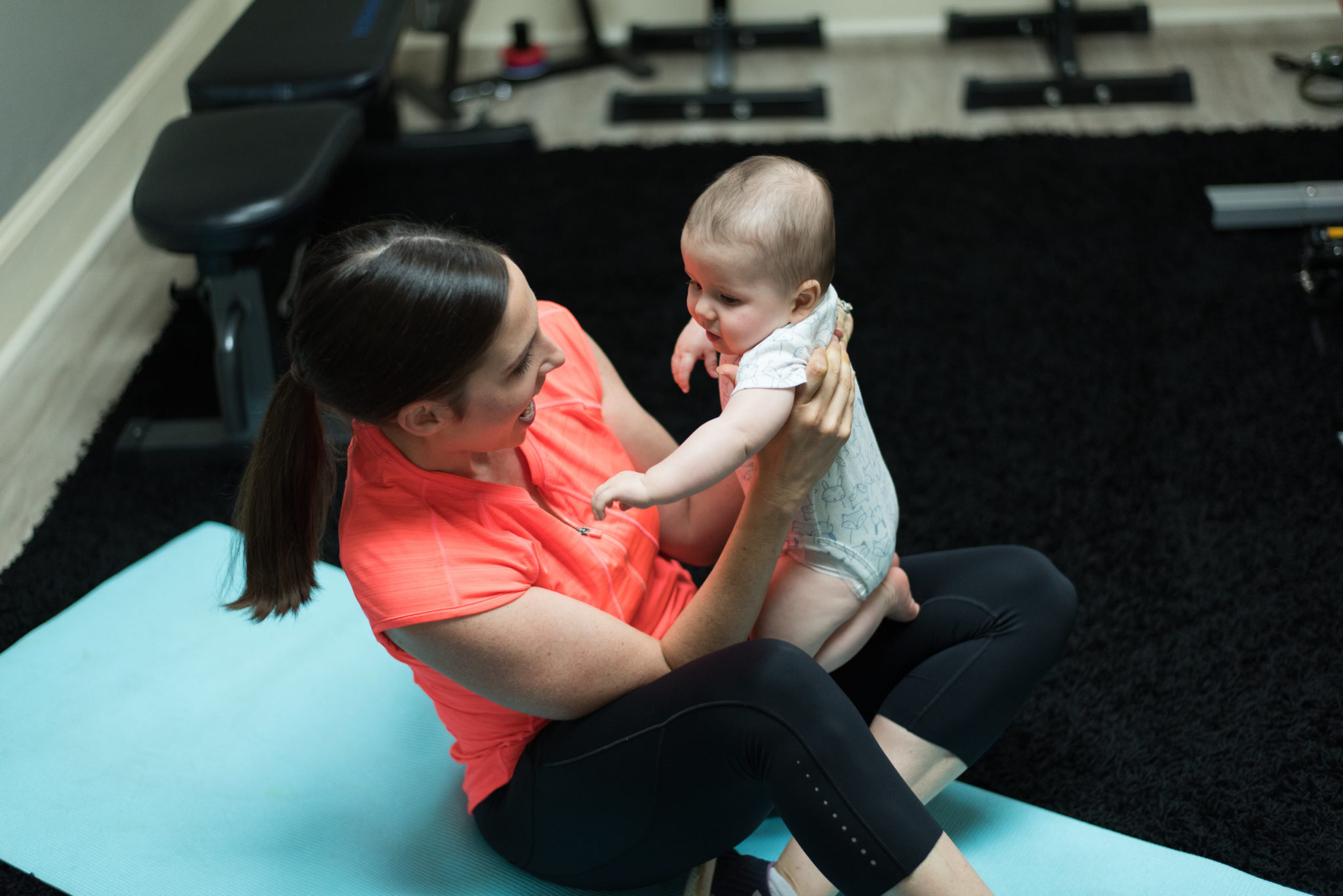
The primary motivation for everything I coach comes from my own journey.
As many of you know, I was diagnosed with PCOS in my early 20s. Beyond the visible symptoms, one of the biggest concerns for a woman who has always known she wanted to be a mom is fertility. I still remember the anxiety and uncertainty I felt every time a doctor hinted at “future difficulties” or brushed off my questions about lifestyle support.
Fast forward to today—I’m a mom of two beautiful kids and a coach who’s had the privilege of guiding women with PCOS for over a decade. I know firsthand how much hope and fear are tied up in this topic. That’s why I’m passionate about sharing strategies that don’t just look good on paper, but actually help women restore their cycles, improve ovulation, and prepare their bodies for pregnancy.
In this 2025 update, I’m sharing six of the most effective movement hacks for PCOS fertility. These aren’t about punishing workouts or chasing calories burned. They’re about hormonal calm, metabolic strength, and circulation—the foundations that create an environment where your body feels safe and capable of conceiving.
Why Movement Matters for Fertility in PCOS
Exercise is one of the most powerful (and underutilized) tools we have for PCOS. Not because it magically “fixes” everything, but because it directly impacts the systems that drive both symptoms and fertility:
- Insulin sensitivity → reduces high insulin levels that disrupt ovulation.
- Stress hormones → lowers cortisol spikes that can interfere with reproductive hormones.
- Circulation & inflammation → improves blood flow to the ovaries and reduces inflammatory stress.
- Sleep & circadian rhythm → keeps your internal clock aligned, supporting regular cycles.
Recent studies back this up: while exercise doesn’t guarantee pregnancy, research shows it consistently improves cycle regularity, metabolic markers, and overall reproductive health in PCOS women. In other words—movement builds the foundation for fertility.
The 6 Movement Hacks for PCOS Fertility
Hack 1: Shift to Strength for Insulin Advantage
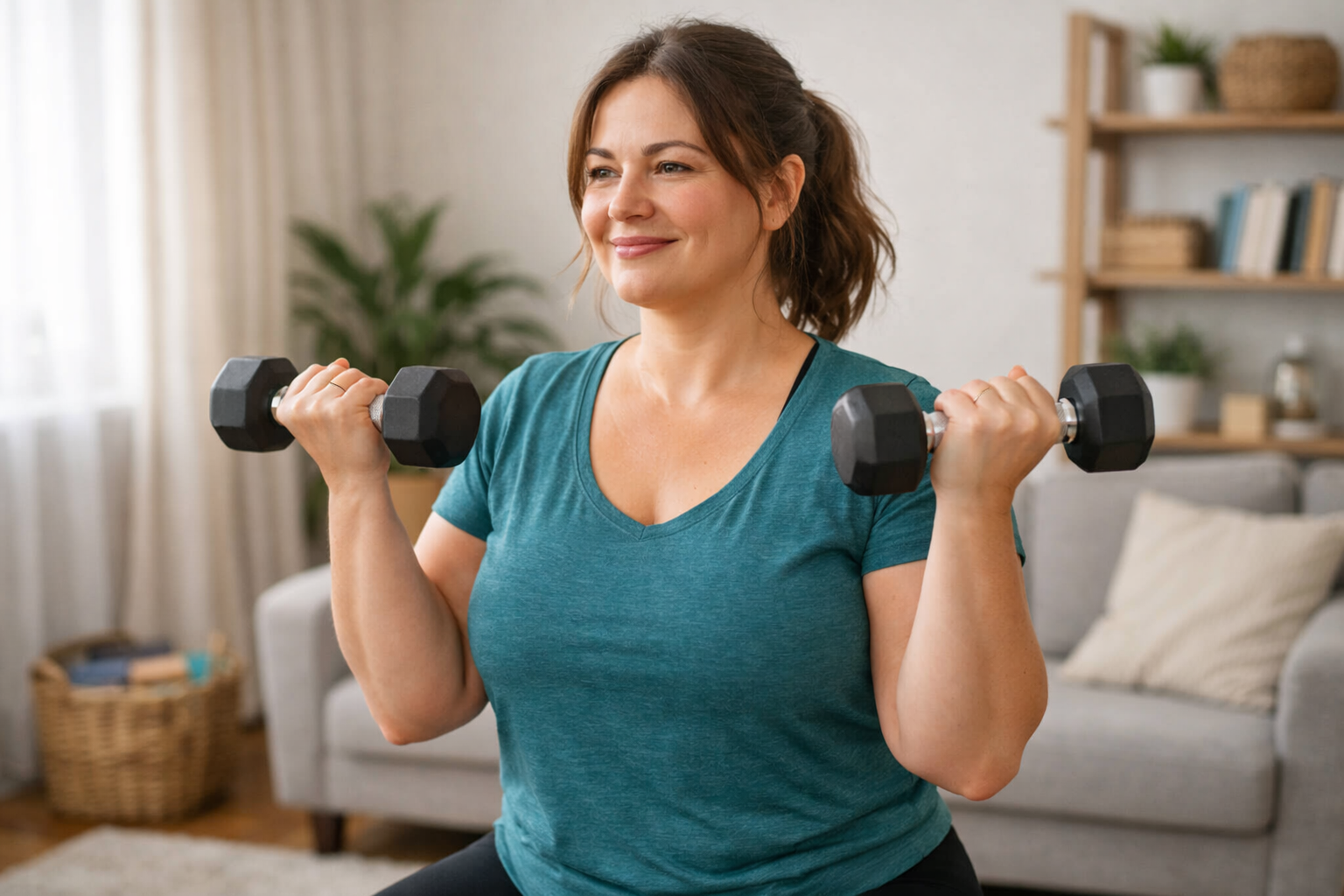
When it comes to PCOS, strength training is your best friend. Building muscle tissue is one of the most effective ways to improve how your body uses insulin. Since high insulin is a major driver of PCOS symptoms—including irregular cycles—this is a fertility superpower.
How to apply it:
- Focus on 2–3 strength sessions per week.
- Stick to basic moves: squats, deadlifts, presses, rows.
- You don’t need heavy barbells—bodyweight, dumbbells, or bands are enough to start.
- Aim for progressive overload (gradually increasing weight, reps, or time under tension).
👉 The research is clear: better insulin sensitivity = improved ovulation odds.
Hack 2: Use Supportive Movement to Calm Cortisol and Stress
Stress is sneaky with PCOS. Elevated cortisol can throw off progesterone and estrogen balance, making cycles irregular. Exercise is amazing for stress—but only if you choose the right types.
High-intensity training every day? That can actually raise cortisol and backfire. Supportive movement—like yoga, walking, gentle cycling, or Pilates—activates your parasympathetic nervous system and lowers stress hormones.
How to apply it:
- Add 20–30 minutes of calming movement most days.
- Try restorative yoga, breath-based Pilates, or nature walks.
- Use movement as an active recovery tool, not just a calorie burn.
Think of this as “fertility insurance.” You’re telling your body: You are safe. You can shift energy toward reproduction instead of just surviving stress.
Hack 3: The Power of Consistent Gentle Movement for Circulation
Blood flow is underrated in the fertility conversation. Consistent, gentle movement helps increase circulation, delivering oxygen and nutrients to your ovaries, uterus, and endocrine system.
Research shows that women who simply reduce sedentary time and add light activity see improvements in cycle regularity and hormone levels—even without big workouts.
How to apply it:
- Aim for 7,000–10,000 steps most days.
- Break up long sitting periods with 5–10 minutes of walking or stretching.
- Use “movement snacks”—a set of squats, a quick stretch, or climbing stairs.
It’s not glamorous, but it’s the daily consistency that rewires your hormonal environment.
Hack 4: Synchronize Movement with Your Body’s Natural Rhythm
Here’s where 2025 science gets exciting: studies are finding that when you exercise matters, not just how. Morning or mixed-timing activity (some AM, some PM) may be linked to lower risk of PCOS and better reproductive health outcomes.
Why? Because your circadian rhythm—your body’s internal clock—controls hormones like melatonin, cortisol, and insulin. Movement at the “right time” helps align these rhythms.
How to apply it:
- If you can, schedule workouts earlier in the day (morning through early afternoon).
- Avoid super late-night intense workouts, which may disrupt sleep and hormonal rhythms.
- Pay attention to your personal energy curve—if mornings feel awful, split sessions (short walk AM, strength later).
This is about flowing with your biology, not fighting it.
Hack 5: Prioritize Recovery and Sleep as Part of Your Training
Here’s the truth: overdoing exercise can harm fertility as much as underdoing it. Inconsistent self-care often comes from a cycle of overwork and under-recovery. With PCOS, recovery is non-negotiable.
Why it matters: sleep and recovery time regulate your hypothalamic-pituitary-ovarian (HPO) axis. Poor sleep and under-recovery = more stress hormones, more insulin resistance, less ovulation.
How to apply it:
- Sleep 7–9 hours most nights (protect it like a workout).
- Recovery workouts aren’t laziness—they’re hormonal reset days.
- Add restorative practices: stretching, foam rolling, warm baths, or guided relaxation.
Think of recovery as the hidden workout—it’s when the magic (muscle building, hormone balancing) actually happens.
Hack 6: Make Movement Enjoyable to Stay Consistent
Finally, the most practical fertility hack of all: consistency beats perfection. The best movement is the one you’ll do week after week—not the perfect program you abandon in three weeks.
How to apply it:
- Choose forms of exercise you actually enjoy.
- Make it social—invite a friend or join a class.
- Track small wins (better energy, more regular cycles, improved strength).
- Reframe exercise as self-care, not punishment.
Consistency doesn’t just build habits—it builds hormonal stability. And with PCOS, stability is everything.
Pulling It All Together
Let’s zoom out. Here are the six fertility movement hacks in one place:
- Strength training → improves insulin sensitivity.
- Supportive, stress-calming movement → lowers cortisol.
- Consistent gentle movement → boosts circulation.
- Circadian-friendly exercise timing → syncs hormones with your internal clock.
- Recovery and sleep → regulate reproductive hormones.
- Enjoyable, consistent routines → keep your system stable.
This isn’t about working harder—it’s about working smarter. Every piece of movement you add is a vote for your future fertility and hormonal calm.
Next Steps
Accessing the right knowledge is the first step, but applying it consistently is the real challenge. Click here to download my free 10-minute workout guide and join my email list. You will get all the actionable guidance, science-backed hacks, and encouragement I share weekly.
And make sure you stay tuned: In my next emails, I’m sharing the full details on how you can join me to work together on finishing a strong 2025.